Launching your first eCommerce store in 2026 feels very different from how it did even a few years ago. The tools are easier, the platforms are smarter, and yet the margin for error feels smaller than ever. Customers move fast. They judge faster. And once they decide your store doesn’t feel right, they rarely come back.
Most first-time founders think the hard part is building the store. In reality, the hard part is making the right decisions before you ever touch a theme or upload a product.
At Proactive Commerce, we work with brands at the exact moment where ideas turn into execution. Some come to us before launch, others after things quietly go wrong. The difference between those two groups usually comes down to preparation, not ambition.
If you want to see what guided launches actually look like in practice, you can watch real client stories through our video testimonials or verify our experience directly via our Shopify Partner profile. And if you’re still weighing options, you canbook a discovery call to talk things through before committing to anything.
Why Launching an e-Commerce Store in 2026 Is Different
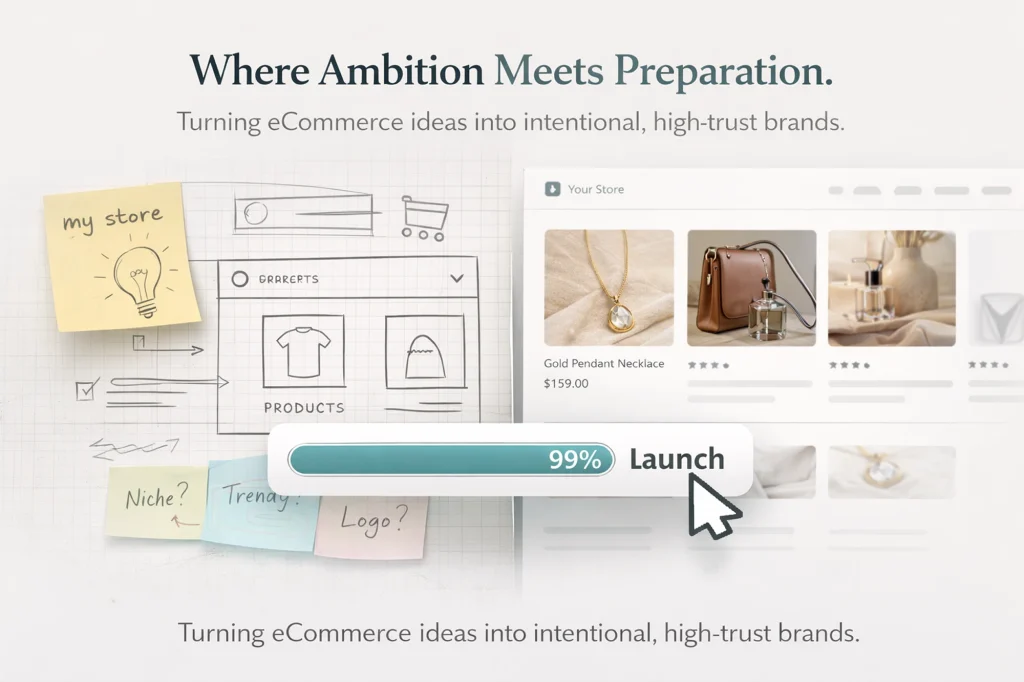
A few years ago, speed was everything. Get online fast, test fast, fix later. That mindset doesn’t hold up the same way in 2026. Customers now expect stores to feel established from the first visit. They look for clarity, consistency, and signs that a real business exists behind the screen.
This doesn’t mean your store needs to be perfect. It does mean it needs to feel intentional. When visitors sense that a store has been rushed, they hesitate. That hesitation shows up in abandoned carts, low trust, and poor word-of-mouth, even if the product itself is solid.
Clarity before creativity
Before design decisions or platform choices, you need to be painfully clear about what you’re building and who it’s for. Many first-time founders skip this step because it feels abstract. It isn’t. This clarity determines how your homepage reads, how your products are framed, and whether your marketing resonates at all.
We often see stores struggle not because the idea is bad, but because it tries to speak to everyone at once. Narrow focus almost always performs better, especially early on. That’s why strategy is a core part of our eCommerce consulting work it prevents expensive rewrites later.

Choosing a Platform That Supports Growth, Not Just Launch
Platform choice is one of those decisions that feels simple at first and complicated later. In 2026, Shopify remains the platform many serious brands choose, not because it’s trendy, but because it removes technical distractions while still allowing room to grow.
The problems usually don’t come from Shopify itself. They come from how it’s set up. Poor structure, unnecessary apps, and rushed configurations can slow a store down and limit flexibility. Our Shopify development work focuses on avoiding those traps early, when they’re easiest to prevent.
Designing a Store That Instantly Feels Trustworthy
Good eCommerce design doesn’t shout. It guides. When someone lands on your store, they should immediately understand what you sell, why it matters, and where to go next. Anything that gets in the way of that understanding works against you.
We’ve seen beautifully designed stores struggle because visitors felt unsure. We’ve also seen simple, clean stores outperform expectations because they felt honest and easy to navigate. That’s the thinking behind our approach to eCommerce website design: clarity first, aesthetics second.
Setting Up Payments, Shipping, and Checkout Without Future Friction
Checkout, shipping, and payments rarely get the attention they deserve during launch. They should. This is where trust is either confirmed or lost. Unexpected shipping costs, confusing delivery timelines, or limited payment options don’t cause dramatic failures they cause silent ones.
When these systems are set up carefully from the beginning, growth feels smoother later. When they aren’t, scaling becomes stressful and expensive.
Planning Traffic Before You Go Live
Launching a store without a traffic plan is like opening a shop and hoping someone walks by. In 2026, organic visibility still matters, but it takes time. That’s why structure matters early. Clean URLs, logical navigation, and readable content all support long-term SEO without feeling forced.
Our eCommerce SEO work focuses on steady growth rather than quick wins, because stores built that way last longer and cost less to maintain.
Launching, Learning, and Optimizing for Sustainable Growth
The biggest mental shift new founders need is this: launch is not a verdict. It’s a starting signal. Real insight comes after real users arrive. What they click, where they pause, what confuses them all of that data is far more valuable than assumptions made in isolation.
If you want to launch with guidance instead of guesswork, you can book a strategy call with Proactive Commerce and talk through what makes sense for your specific situation.